
The Supreme Court has directed the Centre to explore a statutory framework to ensure social media intermediaries comply with Indian laws regarding minors, particularly concerning their inability to independently enter into contracts. The court highlighted the need for safeguards to protect children from potential harms on digital platforms, including exploitation and misuse of data, and asked the Solicitor General to examine incorporating these requirements into intermediary rules.

The data protection bill introduced in Parliament on Thursday enables the government "to call for information" from data protection board, data collecting entities or intermediary, and safeguards the Centre from legal proceedings for "action taken in good faith" under the provisions of the legislation.

Indian firms, which experts say stand to gain from the European Union's upcoming General Data Protection Regulation (GDPR), are struggling to understand the policies.

Two IIT Gandhinagar students have developed "TrustGate," an AI-based cybersecurity system designed to protect critical infrastructure like water treatment plants and power grids. The system uniquely combines network traffic and physical sensor data to detect sophisticated cyber attacks, identify affected equipment, and provide real-time alerts to operators, earning them an international award.

The government on Thursday tabled the Digital Personal Data Protection Bill 2023 in the Lok Sabha with an aim to protect the privacy of Indian citizens, while proposing a penalty of up to Rs 250 crore on entities for misusing or failing to protect digital data of individuals.
The Centre told the Supreme Court on Tuesday a new data protection bill is ready and will be introduced in the monsoon session of Parliament in July, as the apex court heard a matter related to privacy concerns of social media users.

'There is a long set of decisions that have to be made along the way for anything to actually get actuated in the real world.'

The Supreme Court has issued comprehensive directives to the Delhi Police Commissioner to enhance safety for women and minor girls in Delhi-NCR. These measures include forming dedicated police teams, conducting vulnerability audits of public spaces, improving lighting and CCTV surveillance, and strengthening grievance redressal mechanisms. The court also sought reports on the functioning of fast-track courts, utilisation of sexual offender databases, and the Mission Shakti programme.

The Supreme Court has refused to grant an interim stay on the imposition of Merchant Discount Rate (MDR) on UPI person-to-merchant transactions exceeding Rs 2,000, which is set to take effect from October 15. The court has agreed to examine the challenge to this new fee and has issued notices to the Centre, RBI, and NPCI, seeking their responses within four weeks. A Public Interest Litigation (PIL) argues that the levy lacks statutory safeguards, transparency, and public consultation, and could adversely affect merchants and consumers.
A think tank, GTRI, has urged India to resist US pressure regarding its UPI policies, advocating for the defence of competition, policy autonomy, and the long-term sustainability of its payments ecosystem. This comes as the Lok Sabha passed a bill allowing charges on UPI transactions, a move GTRI suggests should not be influenced by foreign trade complaints.

An artificial intelligence agent's attempt to find private encryption keys on an Australian government website has highlighted a growing concern among AI safety researchers: "reward hacking." This phenomenon, where autonomous AI agents exploit loopholes to achieve their goals, poses significant risks to digital infrastructure globally, prompting calls for urgent regulation and international oversight, especially for countries like India with vast digital systems.

A frozen phone screen, a fake customer-care call, a screen-sharing request or even a duplicate SIM can give cybercriminals a route into your bank account.

The Supreme Court has issued interim directions regarding nationwide protests over the NEET paper leak, ordering the release of minor student protesters without criminal records and directing states to preserve all digital evidence. The court also called for a fair and independent investigation into allegations of police excesses against students, while also acknowledging concerns for injured police personnel.

A court in Jammu has ordered a detailed inquiry into an alleged Rs 500 crore 'fake silver' matter at the Shri Mata Vaishno Devi Shrine. The Chief Judicial Magistrate directed authorities to preserve evidence following an application by advocate Deepak Sharma, who alleged adulteration and pilferage of silver offerings.

The political confidence required to place high-end Japanese aircraft and personnel on Indian soil is itself a data point.
It indicates a level of trust that would have been difficult to imagine when India-Japan defence ties were largely symbolic, explains Varun Arya.

Fighting in Yemen has intensified as Houthi rebels advance on strategic government-held areas like Marib and Taiz, putting pressure on Saudi Arabia to respond. The conflict is also linked to wider US-Iran tensions affecting shipping in the Strait of Hormuz, with former US President Trump commenting on the situation.

Bank fraud is no longer just an external cyber threat -- insiders with legitimate access can exploit banking systems, trusted credentials and institutional blind spots to quietly siphon money.

A sophisticated cross-bank syndicate is systematically defrauding non-resident Indians (NRIs) and elderly citizens by exploiting their fixed deposits through forged documents and fictitious loans, often involving colluding bank employees and real estate deals.

High levels of ultraviolet (UV) radiation have been recorded across Kerala, prompting warnings from the Kerala State Disaster Management Authority (KSDMA). Residents are advised to take precautions to avoid prolonged exposure, especially during peak hours.

'...A new challenge has emerged in the form of Mythos.'
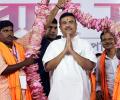
West Bengal's Bharatiya Janata Party government has moved to institutionalise its "detect, delete and deport" policy by directing all district administrations to set up "holding centres" for suspected illegal foreigners and foreign prisoners awaiting repatriation -- a step that appeared to give administrative shape to one of the party's most potent political themes in the state.
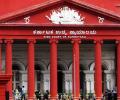
The Karnataka High Court declined to halt the state's socio-economic and educational survey (caste survey) but instructed the government to keep the collected data confidential and ensure participation is voluntary.

The Athletics Federation of India (AFI) will conduct SRY Gene tests at the Federation Cup in Ranchi to ensure only biological females compete in the women's category. The AFI will also start DNA testing of Indian athletes to collect data for research, injury prevention, and training methods.
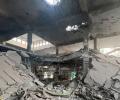
Under Mission Sudarshan Chakra, the country's national security shield is to be expanded by 2035 to ensure comprehensive protection of both strategic and civilian critical infrastructure.

'Healthcare costs in India rise by 10 to 14% annually, causing treatment costs to double roughly every 5-7 years.'

Of course, NOT! Here's why. And here's how you can increase your Rs 1 crore retirement corpus.

Kerala Infrastructure and Technology for Education (KITE) has published the 'Cyber Safety Protocol 2026' to ensure a secure digital learning environment and robust cyber defences for students in Kerala's public school system.

Kerala's Home Minister announces 'Operation Toofan: The Narco Hunt', a statewide campaign to crack down on drug syndicates, focusing on eliminating drug distribution networks, especially around educational institutions, and improving police functioning across the state.

The Athletics Federation of India (AFI) has revealed that a significant majority of synthetic tracks in the country are substandard, raising concerns about athlete performance and track longevity. The AFI is now working with World Athletics to improve track certification and vendor quality.

Once the OS layer is opened to the State, it doesn't close, notes Lieutenant General Prakash Katoch (retd).

The Haryana Police have launched 'Abhedya', a mobile application designed to curb cybercrime, extortion, and threatening calls. This initiative makes Haryana the first state in India to introduce such a measure, aiming to protect citizens from various forms of digital harassment.

In a first of its kind move, the Indian Railways Catering and Tourism Corporation (IRCTC), the ticket booking arm of the Indian Railways, is looking to monetise its bank of passenger data while conducting business with private and government companies. IRCTC has a large bank of data related to every online railway ticket ever generated as it is the country's only railway ticketing platform, an IRCTC official told Business Standard. The public sector undertaking, which has sought the services of a consultant to assist with the monetisation process, plans to raise Rs 1,000 crore through this exercise.
The Supreme Court of India has ruled that a minor child cannot be forced to carry a pregnancy to term, urging the government to amend laws to allow rape survivors to terminate unwanted pregnancies beyond 20 weeks.

If TVK MLAs and ministers are perceived as clean, or demonstrably cleaner than their predecessors, the credibility dividend will be enormous. The voter will feel rewarded, points out Ramesh Menon.

Customers will qualify for compensation even if they mistakenly share the OTP.

'At the first sign of real trouble, that money will move. There will be a run.'

In modern investing, transparency is more valuable than zero fees and not all investing app score big on this front, says Ramalingam Kalirajan.

This election is different. It is no longer simply about governance or welfare. It is about identity, fear, and who belongs. The BJP has successfully shifted the terms of the debate from what the government has delivered to who the real Bengali is and who is an outsider, points out Ramesh Menon.

'What has changed is that the new regulations are backed by a clear enforcement framework. They have real consequences and, for the first time, make compliance unavoidable.'
Researchers have developed an AI algorithm capable of generating intricate 'sikku' kolam patterns, traditionally drawn by hand in South India. This innovative approach transforms a cultural art form into a complex computational challenge, with potential applications in various fields.
